
Depending on your need, whether it’s a pump for a domestic fountain or a large pump for irrigation, choosing the right pump for each application can make all the difference. This will be the essential guide to dive into the world of water pumps. We will review its features, and whether we can find pumps that operate without electricity or external energy. Today, we will go in depth into all of this: how they are made, how they work, and above all, which are the best choices when it comes time to decide.
How do water pumps work?
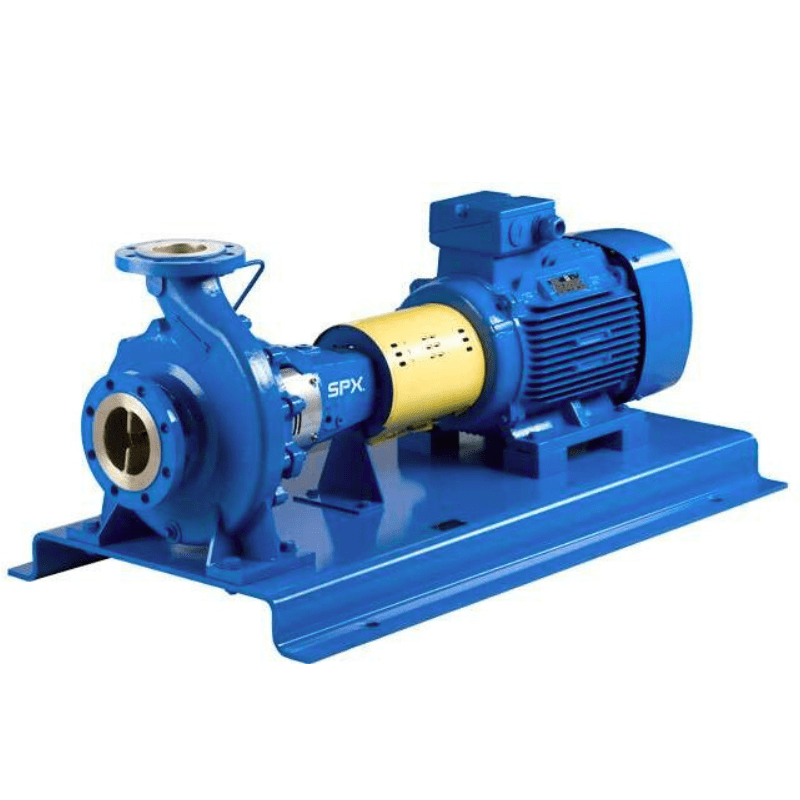
When we talk about water pumps, we most likely enter the world of centrifugal pumps, which are the most well-known and widely used worldwide. In most cases, their mechanical energy is provided by an electric motor. Centrifugal pumps are devices that convert the mechanical energy they receive from the motor shaft into hydraulic energy, expressed in flow and pressure. They achieve this by taking the liquid through the center of the impeller, which, as it spins, throws it outward thanks to centrifugal force. As the liquid exits the impeller, its velocity is converted into pressure in the pump casing, allowing the fluid to be pushed through the discharge pipe with higher pressure than at the inlet.
How are water pumps made?
Depending on the manufacturer, we can find various designs and construction processes. In most cases, the casing is made of cast iron, as is the impeller, although the impeller can also be made of bronze or stainless steel. We can also find water pumps made from stainless steel sheets, which provide lightness and the properties of stainless steel without excessively high costs. Water pumps have a shaft whose sealing is controlled by a mechanical seal or a gland-type seal. This shaft is connected to a motor, which can be electric or powered by another energy source.
Can a water pump work without electricity?
Yes, a centrifugal water pump can be powered by an internal combustion engine, either gasoline or diesel, or it can even use hydraulic energy from flowing water or waterfalls that drive a Pelton-type turbine to power the pump shaft. In addition, solar-powered pumps are becoming increasingly popular. In this case, they are electric pumps, but the electrical source comes from a combination of solar panels and converters.
Where can I get a water pump in Canada?
For retail and domestic applications, it is very common to go to stores like Canadian Tire or Home Depot, which have a wide range of equipment for most domestic applications such as water pressurization, fountains, ponds, small-scale agriculture, and light industrial applications. If your requirement is for more industrial or heavy-duty equipment, it is advisable to contact the representatives of the most iconic brands directly: Grundfos, Goulds, or Franklin Electric.
Factors to consider when choosing a water pump
Once we have a clear understanding of our application, we must know the main terms of flow and pressure, and also be aware of the type of energy available, keeping in mind that no pump works without energy, but we have other power options.
Regarding flow, this refers to the amount of water we want in a given period of time, usually indicated in liters per minute, cubic meters per hour, gallons per minute, etc.
Regarding pressure, we need to know this magnitude expressed in height, usually in meters of water column or feet. In this case, we must consider how high we want to pump the water, but also add the losses due to friction and the service pressure. This is usually the most complex part of hydraulic calculations, but don’t worry—if you want to calculate the total dynamic head of your system, you can download the spreadsheet here.
Once we know these two magnitudes, it’s time to determine the right pump. For this, we must refer to the various performance curves and the required power. With this information and based on what we discussed earlier, we can make an appropriate choice.
Where can I find advice near to me?
At Hidraulica y Bombas, I specialize in handling hydraulic projects and help you make the best decisions. Contact me here.